
There is a form of bias that is particularly difficult to confront because it rarely looks like discrimination.
It sounds like:
- “She isn’t quite ready.”
- “He may struggle with the new technology.”
- “They aren’t quite the culture fit.”
- “Perhaps this role would be too demanding for someone with a physical disability.”
Reasonable observations? Perhaps.
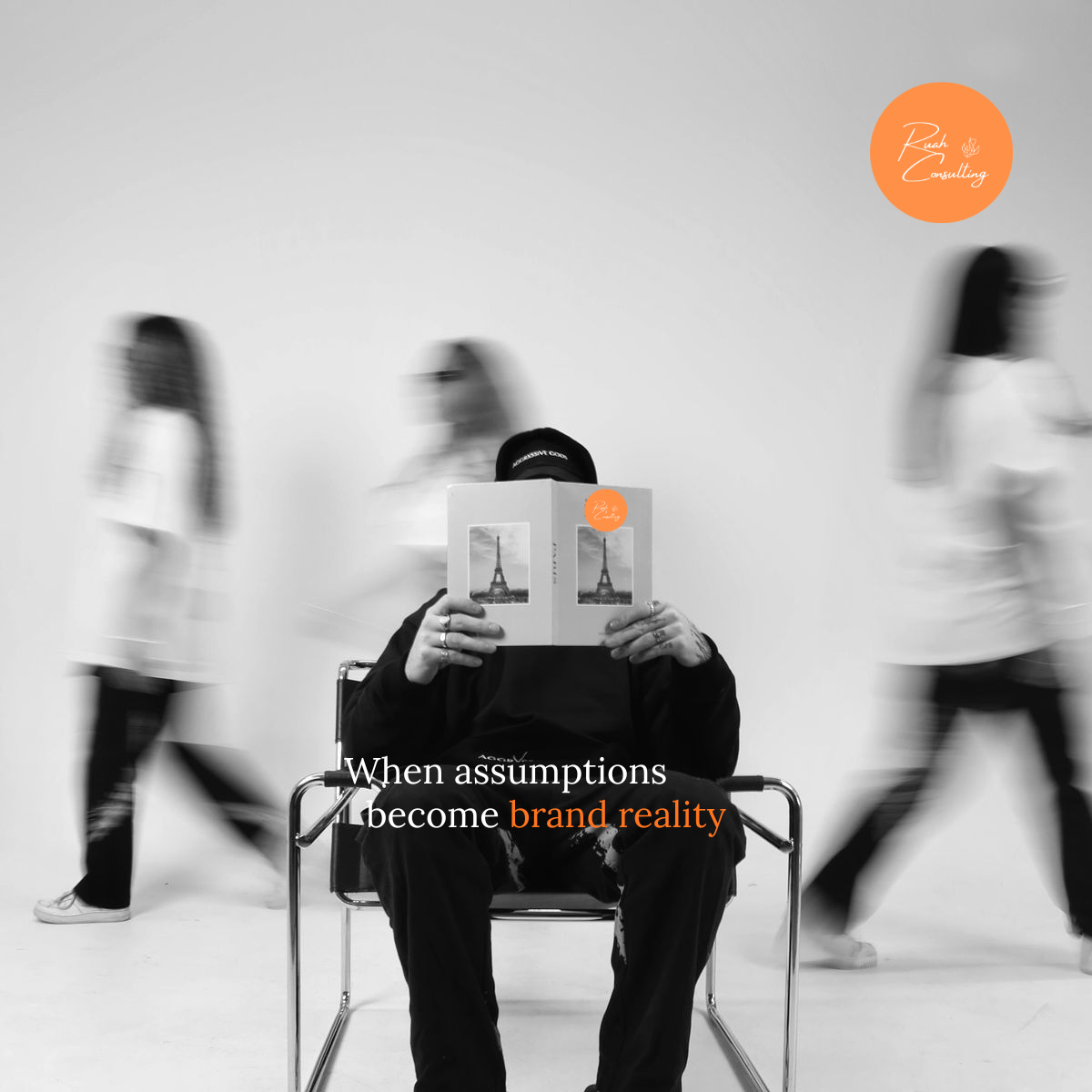
But sometimes, beneath the observation is an assumption. And assumptions, repeated often enough, become decisions. Decisions become patterns. Patterns become culture.
That is why I increasingly see unconscious bias not as an HR or DEI issue, but as an organisational effectiveness issue. It influences who gets heard, hired, developed, promoted and ultimately, whose potential the organisation gets to use.
Four areas reveal this particularly clearly: culture, leadership, learning and communication.
Culture: What we don’t question becomes “the way we do things”
Culture isn’t created by the values printed on the reception wall. It is created by what happens repeatedly and who gets invited into the important meeting, who gets the stretch assignment, whose working style is considered “professional”, and whose isn’t.
Consider an organisation that proudly recruits a highly qualified professional who uses a wheelchair. The intent is inclusive, but the office, meeting rooms or travel arrangements haven’t been designed with accessibility in mind. Gradually, the employee receives fewer site visits or client-facing assignments, not because anyone has consciously excluded them, but because people begin making decisions on their behalf.
The same dynamic plays out with age, race and background. A 55-year-old may be assumed to be less comfortable with AI. A 25-year-old may be considered too inexperienced to lead a seasoned team. Someone from a different cultural background may be expected to “fit in” with the existing way of doing things.
Indra Nooyi, former Chairman and CEO of PepsiCo, captured the distinction well: “Diversity is a number. Inclusion is a mindset.”
The real test of culture isn’t who gets through the door. It is who is allowed to thrive once inside.
Leadership: Are we recognising potential or familiarity?
One of the most powerful forms of unconscious bias is our tendency to recognise people who look, sound or behave like leaders we already know.
We call it leadership potential. Sometimes it is simply familiarity dressed up as judgement.
The articulate extrovert gets noticed. The person who speaks first is seen as confident. The quieter leader is asked to become “more visible”. The older executive may be assumed to resist change. The younger one may be considered lacking in maturity. A leader from a different cultural background may communicate effectively but in a way the organisation isn’t accustomed to reading.
And for people with disabilities, the assumption can be even more fundamental: Can they really handle this role?
Mary Barra, Chair and CEO of General Motors, has described diversity as “a competitive advantage.” That is the point. Diverse leadership isn’t valuable merely because it changes the photograph of the leadership team. It changes the questions being asked and the problems being seen.
The evidence is sobering. Deloitte found women occupied 18.3% of board seats in India in 2023, compared with 23.3% globally. McKinsey’s 2025 Women in the Workplace research found women held only 29% of C-suite positions, while just 93 women were promoted to manager for every 100 men.
The leadership question therefore needs to change from “Does this person look like a leader?” to:
“What evidence tells me this person can lead?”
Learning: Who gets the chance to become “high potential”?
This is where L&D has a particularly important role.
Ask a group of leaders, “Who are your high potentials?” and listen to the names that emerge.
Often they are the people who are visible, vocal, already known to senior leaders or who resemble previous success stories.
But potential isn’t the same as visibility.
What about the technically brilliant introvert? The employee returning after a career break? The 50-year-old still hungry to learn? The young professional who hasn’t yet learned to navigate corporate politics? The person with a disability whose capability has been underestimated?
This is why development needs to be examined before the programme begins.
Who gets nominated? Who gets sponsored? Who gets the stretch assignment? Who gets access to senior leaders?
Leena Nair, CEO of Chanel and former Chief Human Resources Officer of Unilever, has consistently spoken about making organisations more human and creating environments where people can bring more of themselves to work. Her own career is also a useful reminder that leadership potential does not always arrive in the package organisations expect.
If our development systems only recognise people who already fit the organisational mould, we may be measuring conformity, not potential.
Communication: Sometimes bias hides in the feedback
Listen carefully to the language used in organisations.
- “He’s a strong personality.”
- “She needs more executive presence.”
- “He’s passionate.”
- “She’s emotional.”
- “He’s surprisingly good with technology for his age.”
The last one may sound complimentary. It isn’t. It reveals an expectation.
Communication bias matters because words can become part of someone’s organisational record. A vague observation becomes a development objective. That becomes a promotion discussion. Eventually, an opinion becomes organisational “fact”.
Good feedback should describe behaviour and impact, not personality, age, accent, background or how comfortable we personally feel with someone’s style.
Instead of saying, “You need more executive presence,” a manager could say:
“Your analysis was strong, but in the last client meeting you allowed others to make the recommendation. In the next meeting, I would like you to lead the recommendation.”
Now we are coaching behaviour, not conformity.
Julie Sweet, Chair and CEO of Accenture, has repeatedly emphasised the importance of communication and inclusion as leadership responsibilities. The point is simple: communication isn’t merely about transmitting information. It determines whose voice gets amplified.
The truth
Most organisations don’t have a shortage of policies. They have a shortage of reflection.
We can have a sophisticated DEI policy and still make biased hiring decisions. We can run unconscious-bias training and still promote people who remind us of ourselves. We can recruit people with disabilities and still have inaccessible systems. We can celebrate multigenerational teams while quietly assuming that age determines adaptability.
Awareness is important. But awareness without redesign changes very little.
The more useful questions are:
What are we assuming? What evidence are we using? Who might we be overlooking? And what would change if we challenged our default thinking?
These are conversations I increasingly find myself having through my work with Ruah Consulting and not simply “How do we eliminate bias?” but
“Where is bias entering the employee experience, and what can we redesign?”
Perhaps we cannot become completely unbiased. Our brains use shortcuts; experience shapes perception.
But we can become much better at recognising when those shortcuts are making organisational decisions for us.
The organisation that succeeds tomorrow may not be the one with the most sophisticated DEI policy.
It may be the one that is best at answering a much harder question:
Whose potential are we not seeing?
Because when bias determines who gets hired, heard, developed and promoted, organisations don’t simply lose fairness.
They lose capability.
Maria Coelho
Maria Coelho is the founder of Ruah Consulting, a boutique organisational development consultancy working with leadership teams across India. She advises founders, CHROs, and CEOs on building organisational capability, from leader enablement to culture design, favouring structural, durable people infrastructure while applying focused interventions where the situation calls for it. Her work centres on the belief that sustainable performance is built into how an organisation operates, not layered on top of it. Maria writes and speaks regularly on leadership readiness, organisational design, and the human capacity required to navigate an AI-accelerated business environment.